

A Guest Room Is Not a Spare Room
It all begins with an idea.
A guest room isn’t a leftover space.
It isn’t where extra furniture goes to wait.
And it certainly isn’t a room that exists only when someone visits.
It's a space that quietly holds people during moments of change, care, and connection. It also multiplies as a work-from-home space, doubles up as a “I'm sick and I need my space” space or “I need few moments to breathe” space.
At Heart & Home Hoboken, I design guest rooms not as “extras,” but as rooms with purpose; rooms that support real bodies, real rhythms, and real relationships
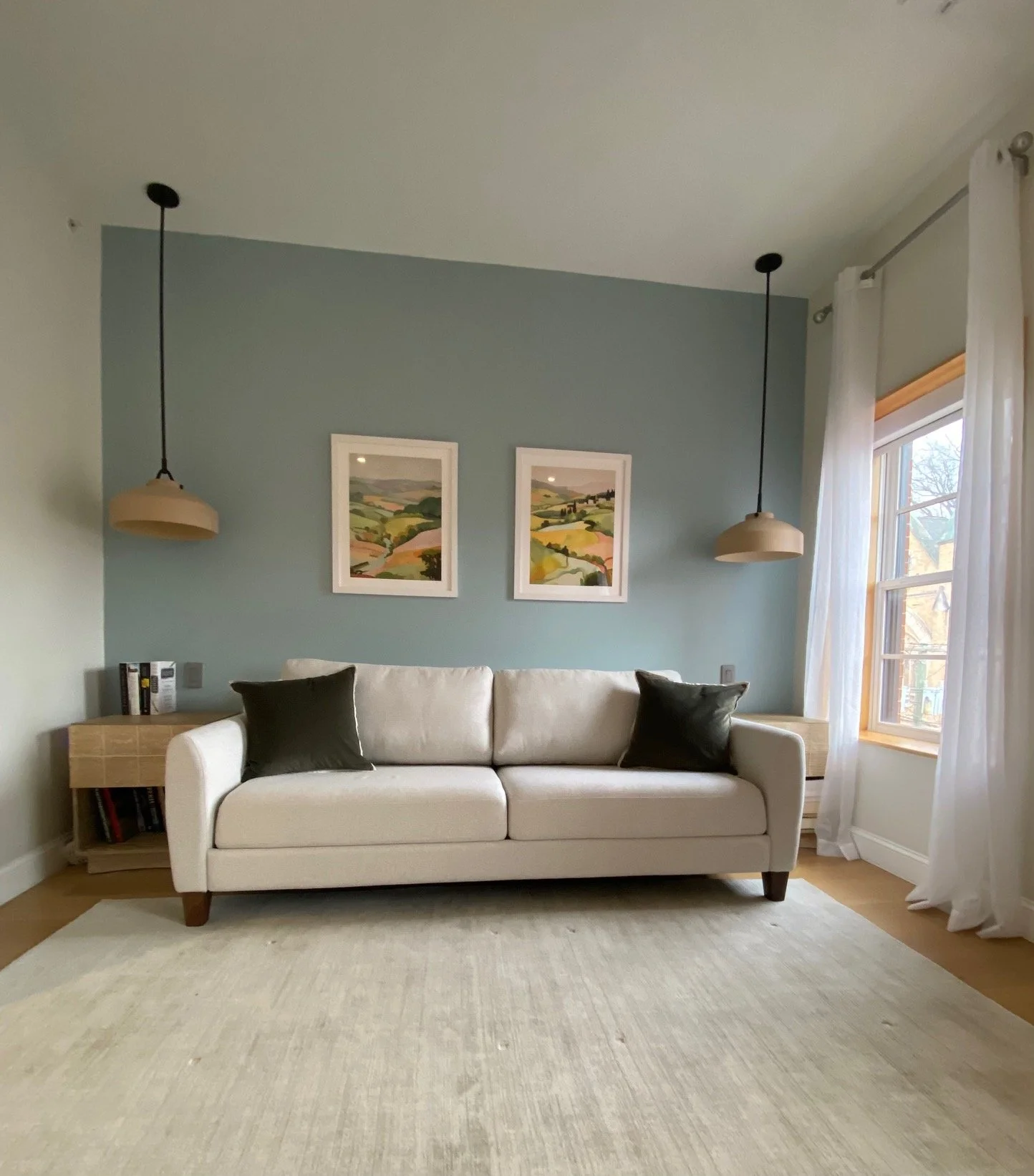
This means thinking beyond aesthetics: A sofa in a home office during the day multiplies into visiting grandparents' bedroom at night. Keeping it decorative and deeply human.
Layered lighting instead of a single overhead source.
Clear surfaces instead of visual clutter.
Soft materials that absorb sound and create warmth.
When a guest room supports rest, it reduces anxiety, for both the guest and the host. No one wants to feel like they’re “in the way.” Design can remove that feeling entirely.
The Power of a Multi-Functional Guest Room
Most homes can’t afford rooms that sit unused and they don’t need to. A thoughtfully designed guest room can also function as a home office, reading or reflection space, a yoga or movement room, calm retreat from the rest of the home with the focused intention and design. That flexibility is what makes a home feel considered rather than chaotic.
A Home That Expands with Life Homes evolve…families grow, parents age, seasons change.
A guest room that’s treated with intention becomes one of the most emotionally important rooms in the house. It’s where visits deepen, conversations linger, and memories quietly form.
A guest room is not a spare room.
It’s a space that holds people, exactly as they are.
About the Author
Shalika Pareek is an interior designer in Hoboken and founder of Heart & Home Hoboken, a studio specializing in creating warm, functional, and personalized homes. She offers virtual interior design services and designer-for-a-day consultations, helping clients turn their kitchens, living rooms, and entire homes into spaces that feel intentional, calm, and lived-in.
Learn more about Shalika’s approach to home design in Hoboken at heartandhomehoboken.com.
Open Kitchen Shelving: Where Everyday Life Gets a Moment
It all begins with an idea.
There’s something quietly comforting about open kitchen shelving.
It’s not loud. It’s not trying too hard. But it changes the feeling of a kitchen almost immediately. The space feels warmer, more relaxed, and most importantly, more lived in.
Unlike closed cabinets, open shelves don’t hide every day. They invite you to come and experience them
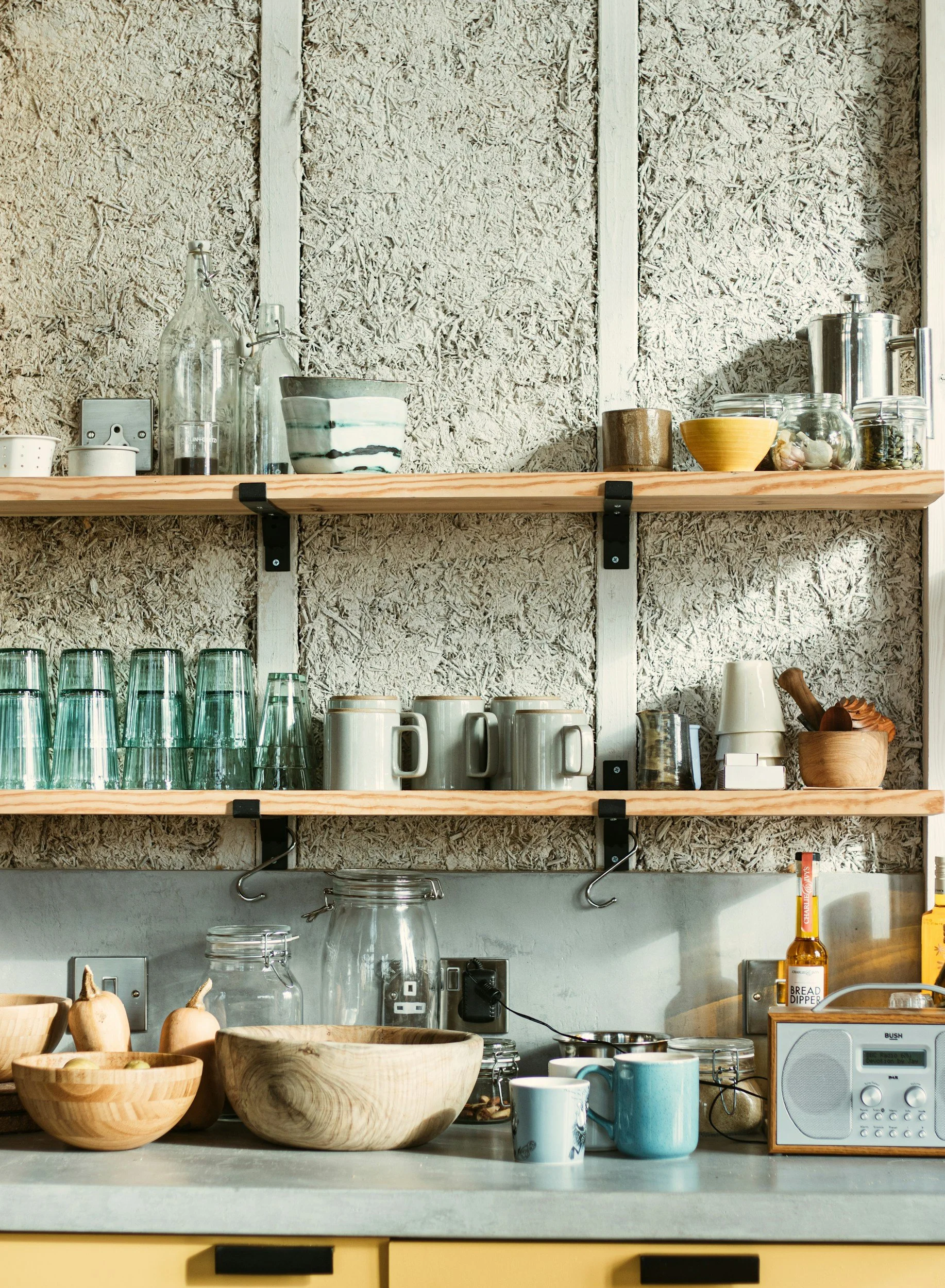
As an interior designer, I’ve always loved open shelving when it’s done with intention, and I use it in my own kitchen. In my home, I opted for butcher-block wood shelves paired with industrial black metal brackets, and I style them with a collected mix of white and soft-neutral, blue China against a whitewashed brick wall, that I absolutely love! That combination instantly creates a space that feels both lived-in and elevated, with a subtle farmhouse influence that still feels polished rather than rustic.
Intentional not Curated Kitchens are where life actually happens. Morning coffee made half-awake. A favorite bowl pulled down without thinking. A mug that somehow feels better than all the others. Open shelving lets those small, ordinary moments stay visible and soften a space. Reliving a memory that makes you smile as you reach out to the bowl stacked casually one on top of other.
Utility Can Be Beautiful One of the biggest misconceptions about open shelving is that it’s purely decorative. In reality, the best shelves are incredibly practical. Plates you reach for daily. Glassware you actually use. Books with worn spines. When functional items are styled thoughtfully, they naturally create beauty without trying.
And when you mix those pieces with something; a framed photo, a handmade bowl, a mug picked up on a trip that gets woven into a story. That could mean your grandmother’s serving dish sitting next to everyday plates. Or a small piece of art that was gifted by your loved one, leaning casually behind stacked bowls. These aren’t objects placed for perfection; they’re reminders of moments, people, and places.
Seeing them throughout the day adds a subtle emotional warmth to the room. It’s a reminder that a home isn’t just designed. It’s lived in.
About the Author
Shalika Pareek is an interior designer in Hoboken and founder of Heart & Home Hoboken, a studio specializing in creating warm, functional, and personalized homes. She offers virtual interior design services and designer-for-a-day consultations, helping clients turn their kitchens, living rooms, and entire homes into spaces that feel intentional, calm, and lived-in.
Learn more about Shalika’s approach to home design in Hoboken at heartandhomehoboken.com.